
How to Start Trading in India
1. Introduction
Day trading, a form of short-term trading, involves buying and selling financial instruments within the same trading day. Unlike long-term investing or even swing trading, which involves holding assets for days or weeks, day trading closes all positions before the market ends for the day. This eliminates the risk of overnight market moves and focuses on rapid price changes that occur throughout the trading session.
The origins of day trading trace back to the rise of electronic trading and internet accessibility in the 1990s. As technology advanced, so did individual access to financial markets. Platforms like E*TRADE and Ameritrade provided retail investors the tools to trade directly on stock exchanges. This democratization of trading, coupled with the increased volatility of financial markets, led to a surge in day trading activity.
People are drawn to day trading for various reasons. Some are motivated by the allure of quick profits, while others enjoy the autonomy of self-directed trading. There’s also an emotional thrill associated with the fast-paced environment of intraday markets. However, the potential for high reward comes with high risk, making it crucial to understand both the mechanics and psychology behind successful day trading.
2. How Day Trading Works
At its core, day trading is simple in concept: buy low, sell high — or, conversely, sell high, buy low (short selling). But executing this consistently and profitably requires deep market understanding, advanced tools, and strategic discipline.
Markets Used:
- Stocks: Most popular among retail traders, especially due to liquidity and volatility.
- Forex (Foreign Exchange): Offers high leverage and operates 24 hours, ideal for traders across time zones.
- Cryptocurrency: Highly volatile and accessible, with 24/7 market access.
- Futures: Contracts to buy/sell an asset at a future date, often used for commodities or indices.
Common Tools and Platforms:
- Trading platforms such as Thinkorswim, Interactive Brokers, MetaTrader, and Robinhood provide charting, order execution, and market data.
- News aggregators and sentiment analysis tools
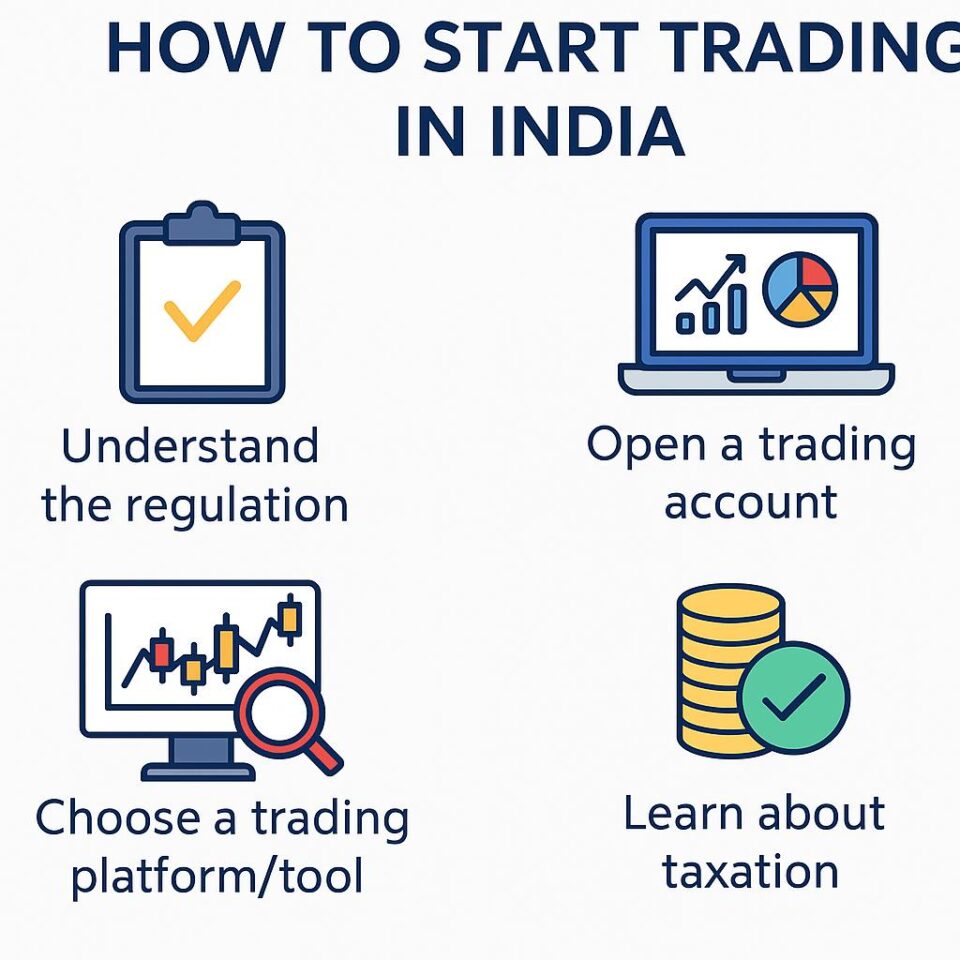
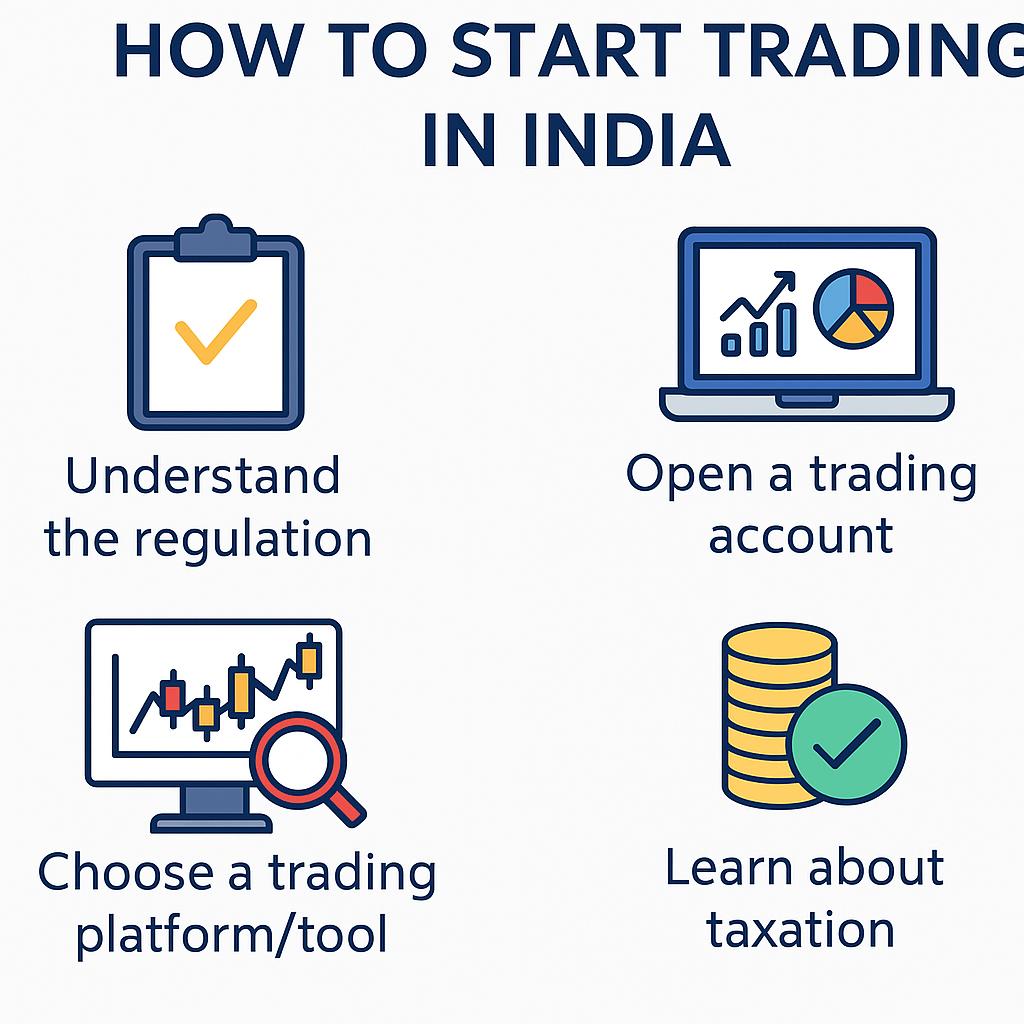
How to Start Trading in India
Trading in India has become increasingly popular over the last decade with the advent of low-cost brokers, smartphone accessibility, and greater financial literacy. However, beginning your trading journey in India requires a structured and regulatory-compliant approach. Here’s a comprehensive guide covering all aspects from setting up an account to managing risk and staying compliant with Indian financial laws.
1. Understanding the Indian Financial Market Structure:
India has two primary stock exchanges:
- NSE (National Stock Exchange)
- BSE (Bombay Stock Exchange)
Both are regulated by the SEBI (Securities and Exchange Board of India), which governs fair trading practices, investor protection, and broker conduct.
India also has derivative markets, commodities exchanges like MCX (Multi Commodity Exchange), and currency trading segments.
2. Choosing a Trading Segment:
- Equities (Cash Segment): Buying/selling shares of listed companies.
- Futures and Options: Derivatives contracts based on underlying stocks or indices.
- Commodities: Trading metals, agriculture, energy contracts.
- Currency Pairs: Trading USD-INR, EUR-INR, etc.
- Mutual Funds and ETFs: Passive or managed portfolios.
3. Documents Required to Start Trading:
- PAN Card
- Aadhaar Card
- Bank Account linked with PAN
- Cancelled Cheque
- Passport-size Photograph
- Proof of income (for derivatives)
- Signature on a white paper
4. Selecting a SEBI-Registered Broker: Choose from full-service brokers (like ICICI Direct, HDFC Securities) or discount brokers (like Zerodha, Upstox, Angel One).
Compare brokers based on:
- Brokerage charges (Zerodha offers flat Rs. 20/trade)
- Platform features (charting tools, mobile app)
- Customer service
- Access to IPOs, mutual funds, and other instruments
5. Opening a Demat and Trading Account: You’ll need both accounts:
- Demat Account: Holds your shares electronically.
- Trading Account: Interface for placing buy/sell orders.
Most brokers offer online KYC and paperless account setup.
6. Learning Market Basics: Begin with these foundational concepts:
- Market Orders, Limit Orders, Stop-Loss
- Support and Resistance Levels
- Candlestick Patterns
- Moving Averages, RSI, MACD
7. Creating Your First Trading Strategy: New traders should test basic strategies like:
- Breakout Trading
- Reversal Patterns
- Volume-based momentum entries
Practice using virtual trading platforms (e.g., NSE’s mock trading or platforms like TradingView).
8. Risk Management Principles:

- Never risk more than 2% of capital on a trade
- Use stop-loss for every trade
- Avoid overtrading — quality over quantity
- Don’t use high leverage initially
9. Taxation and Compliance:
- Profits from trading are taxed under Capital Gains or Business Income depending on frequency.
- File ITR-3 or ITR-4.
- Maintain a trading ledger for audits.
10. Staying Updated:
- Follow SEBI announcements
- Use apps like Moneycontrol, Economic Times, TradingView
- Join webinars and SEBI-certified courses
11. Common Mistakes to Avoid in India:
- Blindly following stock tips from social media
- Trading in illiquid stocks
- Ignoring compliance and taxes
- Emotional decision-making
12. Growth Opportunities in India:
India’s youth, fintech boom, and regulatory openness make it a hotspot for retail traders. The rise of options trading, algo trading (via Zerodha Kite Connect API), and sectoral ETFs adds depth.
